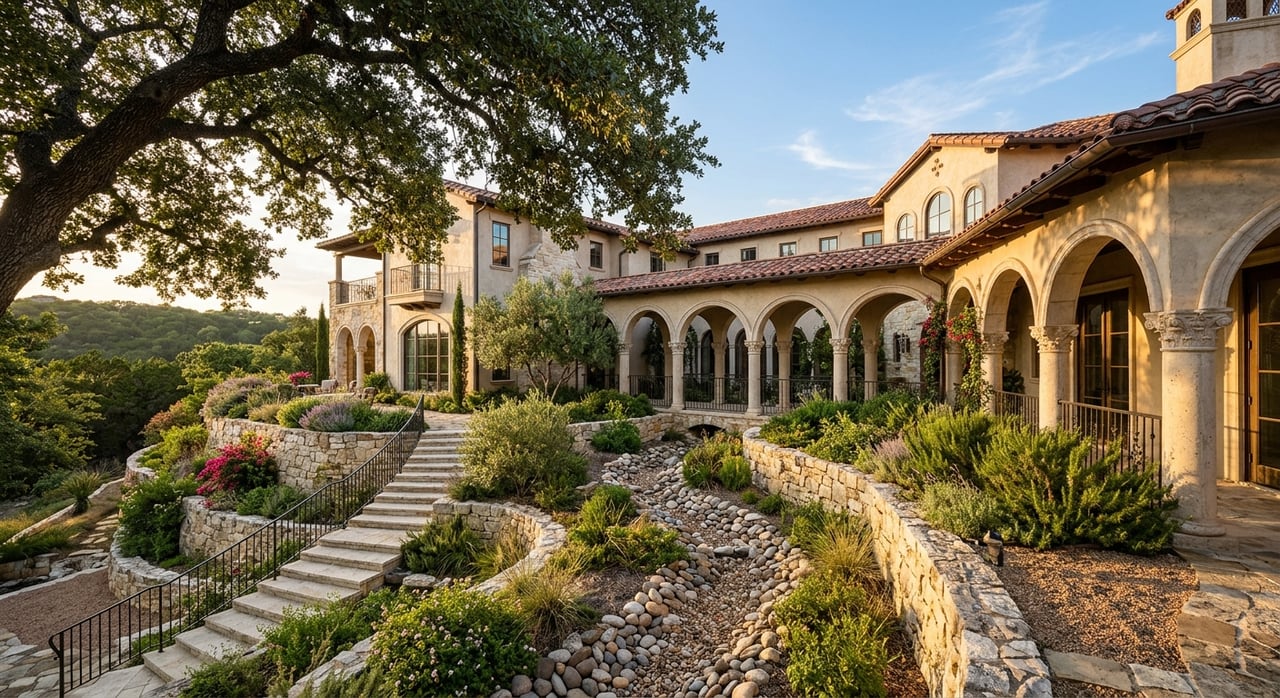
Buying an Estate Home in Alamo: What Smart Buyers Check
Looking for more space, more privacy, and a property that can grow with you? In Alamo, buying an estate home is often about far more than square footage. You are not just choosing a house. You are evaluating land, utility setup, county rules, and long-term options for how you may want to live in the home over time. This guide will help you understand what to look for, what questions to ask, and how to think about value before you make a move. Let’s dive in.
Alamo sits in Contra Costa County as an unincorporated community, which means county departments govern most planning, permitting, and code matters instead of a city government. That matters when you are buying an estate property because future changes like expansions, grading, ADUs, or lot adjustments often depend on county review.
The market also reflects Alamo’s high-end position in the East Bay. Recent Realtor.com data shows roughly 40 active listings and a median asking price around $2.65 million. That gives you a sense of both price point and the level of competition you may face when strong estate properties come to market.
Beyond price, Alamo offers a lifestyle many move-up buyers want. The Iron Horse Regional Trail runs through the area, and the county’s parks program supports local parks and events through CSA R-7A. For many buyers, that mix of larger parcels, outdoor access, and East Bay convenience is a big part of the appeal.
When you buy an estate home in Alamo, the lot size on paper is only the starting point. What matters more is how much of that land is actually usable for the way you want to live.
Recent listings show how varied parcel sizes can be. One Round Hill Country Club home was marketed on 0.39 acres, a Stone Valley Road property on 1.08 acres, and a Livorna Road property on nearly 59,677 square feet. Those numbers sound impressive, but the true value depends on whether the site can support a pool, guest structure, expanded garage, garden, or future addition.
Usable area can shrink quickly once you account for setbacks, slope, trees, drainage work, and creek corridors. Contra Costa County notes that creek structure setbacks can reduce buildable area enough to affect subdivision potential. If you are buying with future improvements in mind, this is one of the first items to verify.
In Alamo, creek and drainage conditions are not minor details. They can affect how you use the property today and what you can build later.
If a parcel sits near a creek or channel, Contra Costa County requires a drainage permit before work that changes water flow or involves building near the waterway. The property owner is also responsible for creek maintenance along private frontage. County rules for creek structure setbacks in unincorporated areas can further limit where improvements can go.
Flood risk also deserves careful attention, even at the luxury end of the market. Contra Costa County requires a floodplain permit for improvements within a FEMA Special Flood Hazard Area and handles flood-zone determinations and elevation-certificate requirements for certain projects. The county also states that standard homeowners insurance does not cover flood damage.
That means a beautiful flat yard or open rear parcel may need a second look before you assume it is fully buildable. If the property has any hint of creek frontage, drainage channels, or floodplain overlap, it is smart to confirm those details early.
Alamo estate homes often sit on parcels with varying topography. That can create privacy and views, but it can also make improvements more complex.
Contra Costa County requires a grading permit for excavations deeper than 5 feet or larger than 200 cubic yards, fill deeper than 3 feet or over 200 cubic yards, and construction of 500 square feet or more on land with slopes exceeding 10 percent. If you are thinking about a guest house, pool terrace, sport court, or expanded motor court, topography matters.
This is one reason two homes with similar acreage can have very different long-term value. A parcel that is easier to improve may be more useful to you than a larger lot with hillside constraints.
Most buyers in Alamo expect public sewer, and in many cases that expectation is correct. The county directory lists Central Contra Costa Sanitary District as serving Alamo, and the county housing element identifies East Bay Municipal Utility District as the water provider.
Still, utility setup should be confirmed at the parcel level. County guidance notes that Environmental Health review may be required when a property has septic or a well, especially if your future plans include additions, new fixtures, or an ADU.
In practical terms, sewer versus septic in Alamo is usually not a neighborhood-wide issue. It is more often a property-specific question tied to an older private system, a special utility arrangement, or remodel plans that increase plumbing or drainage demands.
Many Alamo buyers are not just purchasing for today. They are also buying for what the property could become in a few years.
That is why county approvals matter so much. Contra Costa County requires planning approval before building permits for many projects, including residential units. Its general application process can cover ADUs, lot-line adjustments, subdivisions, rezoning, tree permits, and variances.
For estate buyers, this directly affects value. A larger parcel may carry added appeal if there is a cleaner path to future expansion, while another property may look similar at first glance but face more layers of review. The difference can shape both your budget and your timeline.
Not every part of Alamo behaves the same way. If you are shopping for an estate property, neighborhood name alone does not tell the full story.
According to county information, the P2B district includes the west side of Alamo below Hillgrade Avenue, neighborhoods off Livorna Road and Miranda Avenue, and Stone Valley Road neighborhoods up to Round Hill Country Club. Recent Realtor.com data shows Westside with 13 active listings, a median listing price of $2.4 million, and a median of 20 days on market.
For buyers, that offers helpful context around both inventory and resale pace. Westside is also often associated with the trail-and-park lifestyle because of its proximity to the Iron Horse corridor and county park amenities. If you want larger lots with relatively active market movement, this is a smart area to study closely.
County information places Round Hill, Round Hill North, Windsor Green, and Regency Woods in the P5 district. Market data for Round Hill Country Club shows limited active inventory, with just four active listings noted in the research.
This subarea tends to attract buyers looking for a more club-oriented setting and established neighborhood identity. Limited supply can support value over time, but it can also mean that when a strong property hits the market, buyer competition may be focused and fast.
These pockets deserve extra comparison work. County information notes that Whitegate, Bryan Ranch, Stone Gate, and the Hillgrade area do not currently pay into P2B or P5 and are not receiving those enhanced patrol services.
That does not make one area better or worse. It simply means ownership costs and service expectations may differ by location. When you compare estate homes in these pockets, it is wise to verify parcel details, district boundaries, access, topography, and permitting conditions instead of relying only on the broader Alamo label.
A smart estate purchase in Alamo is usually about flexibility. Before you move forward, think beyond the home as it stands today.
Ask yourself whether the parcel is easy to improve later. If you may want an ADU, a detached office, a pool, or garage expansion, check whether creek setbacks, grading triggers, floodplain review, tree permits, or subdivision conditions could come into play.
Also look closely at utility fit. A public sewer connection may simplify future remodel planning, while a septic-related setup can require additional review. If you know you want to make major changes, this can affect both timing and cost.
Finally, consider how the subarea may affect your ongoing ownership experience. Alamo’s service structure is not perfectly uniform, and recurring assessments or service expectations can vary depending on the parcel’s location. That is worth confirming before you decide how one property compares with another.
Before you commit to an Alamo estate home, make sure you cover these basics:
In a market like Alamo, the best estate purchase is often the property that balances location, usable land, and a realistic path to future improvements. When those pieces line up, you are not just buying a larger home. You are buying options.
If you are weighing estate homes in Alamo and want a clear, local perspective on parcels, market position, and long-term potential, connect with David Downing. You will get thoughtful guidance tailored to the East Bay luxury market and the details that matter most when buying at this level.
Stay up to date on the latest real estate trends.

Partner with David Downing for premier real estate service in Danville, California. With a commitment to excellence, integrity, and a results-oriented approach, David ensures a seamless and rewarding experience for buyers and sellers alike. Trust in his expertise to guide you through your real estate journey with confidence.