Septic or Sewer: The Alamo Question That Decides What You Can Build
Two houses go on the market in Alamo the same week. Same acre-plus lot, same rebuilt kitchen, same asking price within a few thousand dollars of each other. Six months after closing, one owner is renting out a freshly permitted backyard cottage for supplemental income. The other is still waiting on a county review that started before escrow closed, because the item that made the two houses functionally different was never on either listing: what happens to the wastewater when you flush a toilet.
That distinction, sewer or septic, is one of the few things in Alamo real estate that a listing photo, a square footage number, or even a walk-through can't show you. And with Alamo homes spending a median of 35 days on the market as of July 2026, there often isn't much runway to discover it the slow way, mid-escrow.
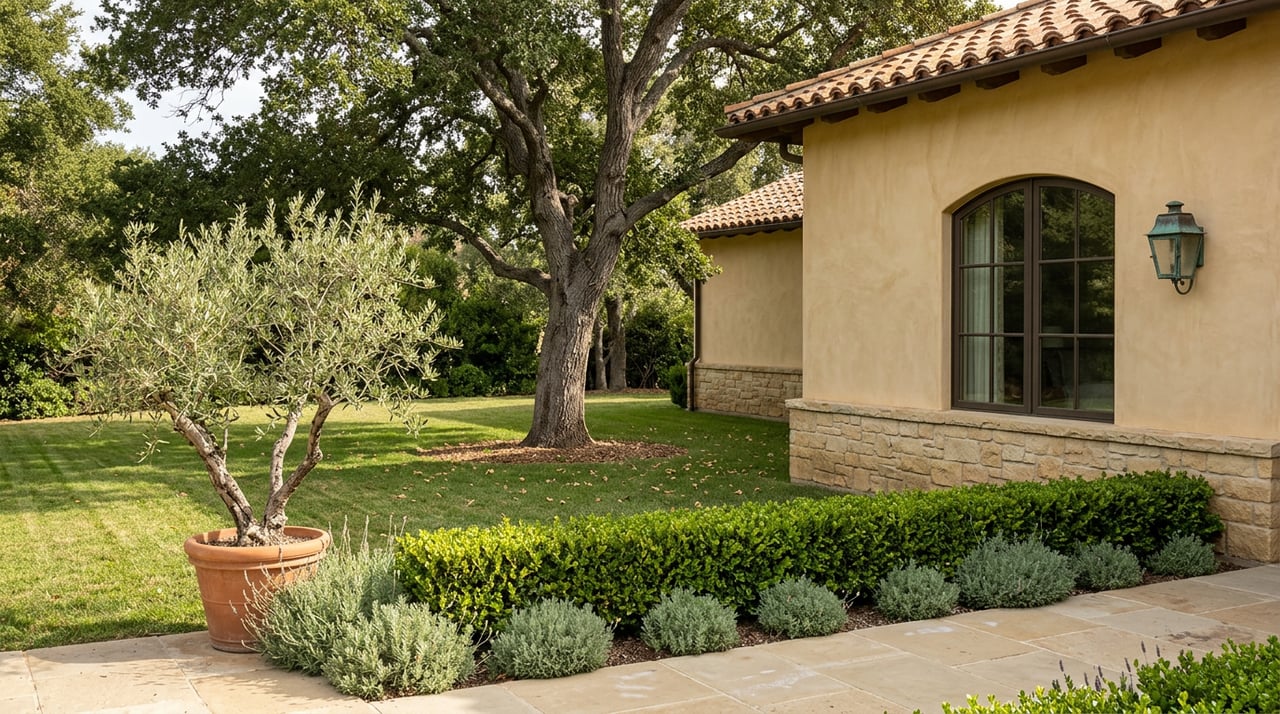
Alamo has no city hall, no city planning department, and no city council. It is unincorporated Contra Costa County, which means every land use question, from a fence height to a septic permit, routes through the county's Department of Conservation and Development in Martinez rather than a local city office. That single fact explains why the community still has the semi-rural texture buyers pay a premium for: rolling, tree-canopied lanes with no sidewalks, oak-shaded half-acre-plus lots, and a housing stock built across many decades under county rather than municipal rules.
It also explains why wastewater service in Alamo is a patchwork rather than a given. The Central Contra Costa Sanitary District, known locally as Central San, runs the public sewer system across a 146-square-mile service area that includes Alamo alongside Danville, Lafayette, Moraga, Orinda, Pleasant Hill and Walnut Creek. But "included in the service area" does not mean every parcel is connected. Older, larger, more rural-feeling lots, exactly the kind that make Alamo distinct, are the ones most likely to still be running on a private septic system that predates the sewer line reaching that street.
Nobody puts "septic" or "sewer" in the headline of an MLS listing. You typically find out from the seller disclosures, a title report, or a direct question to the listing agent. By the time most buyers ask, they've already fallen for the house.
The two most expensive words in an Alamo real estate contract might be "county review," and they only apply if the house you're buying happens to sit on a septic tank.
The clearest place this shows up is the accessory dwelling unit, which has become one of the more common plays in Alamo's 2026 market given how many properties sit on 0.5 acres or more. On a lot already connected to Central San, adding an ADU means paying the district's capacity fee, a fixed charge of $3.63 per square foot capped at 1,200 square feet. For a typical 800-square-foot unit, that works out to under $3,000, a fraction of the $8,539 Central San charges to connect an entirely new house. The ADU's sewer line simply ties into the existing house lateral downstream of the main cleanout, and Central San reviews the plans on paper.
On a septic lot, there's an extra gate before any of that math applies. County ordinance requires the septic system to be approved by Contra Costa County's health officer before an ADU can be established at all. That's not a fee schedule, it's a discretionary sign-off, and it depends on whether the existing system, and the land around it, can support the added flow. A lot with plenty of room for a second leach field clears this easily. A lot where the original system already uses most of the usable soil for percolation may not clear it at any price.
Two buyers can look at the same size lot and the same ADU floor plan and be looking at two entirely different projects, one a permitting formality and one a discretionary approval that isn't guaranteed.
The ADU example is the most visible version of a rule that applies more broadly. Any addition on an Alamo property that has a septic system must be reviewed and approved by Contra Costa Environmental Health before the county will issue a building permit. That includes room additions, pools, decks, outdoor kitchens, and any remodel that adds fixtures or increases the flow into the existing system. On a sewered property, the equivalent step is a sanitary district plan check, usually a faster, more predictable process.
This is where the timeline risk actually lives. A buyer planning a primary suite addition or a kitchen expansion on a septic-served Alamo property should expect an environmental health review to be part of the permit sequence, not an afterthought. It's a real step with its own processing time, and it's one more reason to know a property's wastewater status before you write a contingency-removal deadline into an offer.
Before making an offer on an Alamo property where you're planning to build, it's worth confirming a short list of things directly with the county or the seller:
Two more scenarios are worth knowing before you fall in love with a specific address.
The first is what happens if the septic system fails, or if you're planning substantial improvements and happen to be within about 300 feet of an existing Central San line. In either case, county Environmental Health can require the property to abandon its septic system and connect to public sewer. That conversion carries real, itemized costs: sewer availability, side sewer construction, Central San's connection fees, which currently run roughly $9,200 to $10,200 per residential unit depending on location, and the cost of properly abandoning the old tank. Some of that can be financed through Central San's own program and added to the property tax bill, but it's still a five-figure obligation that a buyer on a sewered lot will never encounter.
The second is what a failing system does to value itself. A septic system in poor condition can suppress what a home is worth until the issue is fixed or the property connects to sewer, while a successful conversion to public sewer can be the thing that raises it. This isn't a hypothetical for Alamo specifically. It's baked directly into how the county and the sanitary district describe septic status in an urban or suburban setting: as a temporary means of treatment that, when it reaches the end of its useful life on a lot too small for a new leach field, has exactly one other option.
There's a third wrinkle for buyers thinking further ahead. If a plan to eventually split an Alamo lot under California's SB 9 is part of the appeal, a septic-served parcel faces its own separate hurdle. The county requires proof that the existing system, or a feasible new one, can serve both resulting lots, including reserve area for a replacement leach field. Some septic parcels simply cannot meet that standard and cannot be split, no matter how large the original lot appears on paper.
As of July 2026, Alamo homes were listing at a median of $3.54 million and typically going under contract within about 35 days. That's not a market that gives buyers months to sort out permitting questions after the fact. If the property you're under contract on needs an environmental health approval before you can build the ADU you budgeted for, or a planned addition adds a county review step your timeline didn't account for, you want to know that before the clock starts, not partway through it.
The fix isn't complicated. It's a single question, asked before you write the offer, not after: is this property on public sewer, or is it on a private septic system, and if it's septic, what does the county's file on that system actually say. The answer changes what a given price actually buys, and in a market moving this fast, that's not a detail to leave for the inspection period.
Does every large lot in Alamo have this issue? No. Many Alamo properties, including newer construction and homes closer to Central San's existing lines, are already connected to public sewer. The septic question matters most for older, larger, more rural-feeling parcels, which happen to be common in Alamo but aren't universal.
How do I find out if a specific Alamo property is on septic or sewer before I make an offer? Ask the listing agent directly, and confirm through seller disclosures and, where available, county Environmental Health records. Central San can also confirm whether a specific address falls within its existing sewer infrastructure.
If a house is on septic, does that mean I can't add an ADU? Not necessarily. It means the ADU needs county health officer approval of the septic system before construction can proceed, which depends on the system's design and the available land. Some septic-served lots clear this easily. Others need an engineered system or a connection to sewer to make an ADU work.
If you're comparing Alamo properties and want a clear answer on what a specific address can and can't support, before you write an offer rather than after, David Downing has spent three decades working this exact corridor of the East Bay. Schedule a free consultation to talk through the property you're considering.
Stay up to date on the latest real estate trends.
Partner with David Downing for premier real estate service in Danville, California. With a commitment to excellence, integrity, and a results-oriented approach, David ensures a seamless and rewarding experience for buyers and sellers alike. Trust in his expertise to guide you through your real estate journey with confidence.