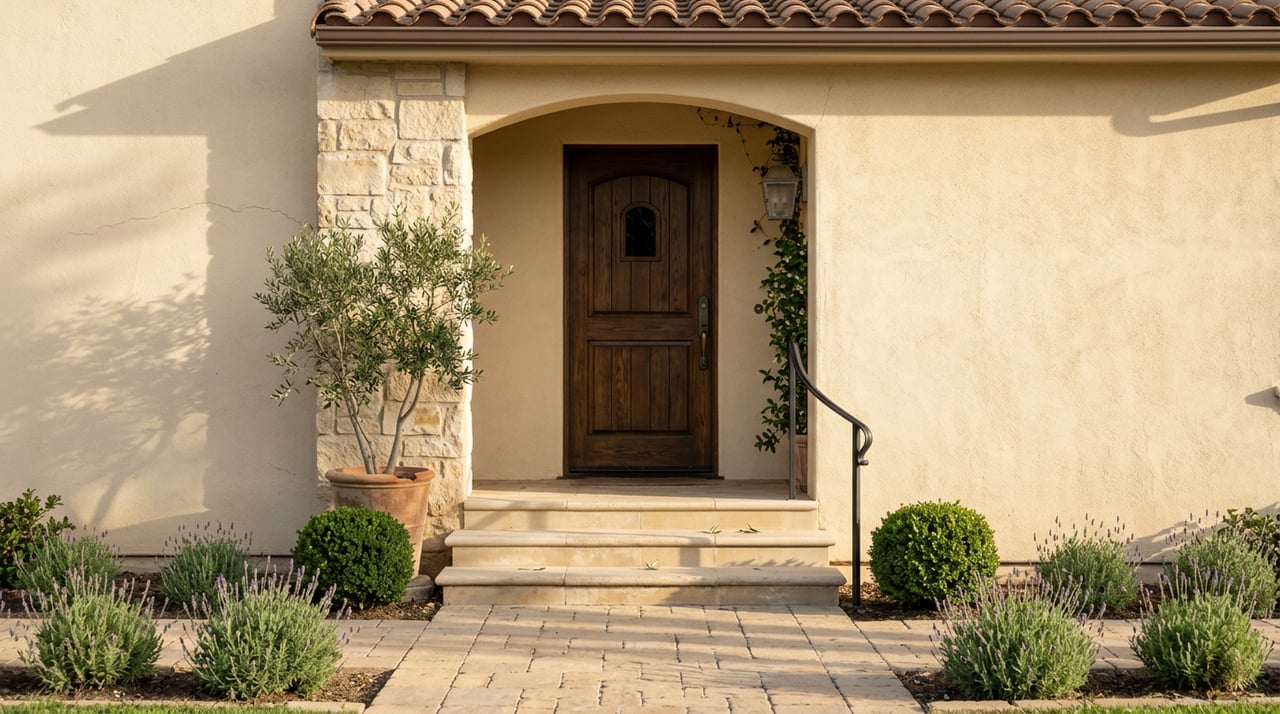
Gale Ranch vs Windemere Mello-Roos Costs Explained
A buyer touring Dougherty Valley this summer did what every online guide tells you to do. Pulled the preliminary title report before writing an offer. Found the Mello-Roos line, confirmed the Community Facilities District, felt reasonably good about the diligence. Then, three weeks into escrow, a second special assessment showed up on the county tax bill, one that had nothing to do with the CFD the title company had already flagged. It wasn't a mistake and it wasn't hidden. It was just a different acronym, governed by a different California law, and none of the generic "check for Mello-Roos" checklists mention it by name.
That's the real friction in Dougherty Valley right now, and it points to a bigger comparison mistake. Buyers choosing between Gale Ranch and Windemere tend to boil the decision down to one line: Gale Ranch has an HOA, Windemere doesn't, so Windemere must carry lower monthly costs. That comparison answers the smallest question on the tax bill and skips the two that actually move the number.
Proposition 13 caps the base property tax rate at 1 percent of assessed value, with increases limited to 2 percent a year. That's the number most buyers budget against. But homes inside a Community Facilities District carry a second charge on top of that base rate, and it doesn't follow the same rules. Current 2026 guidance on Contra Costa County property taxes puts most homeowners in a combined effective rate between 1.10 and 1.40 percent, but flags Dougherty Valley by name as one of the county's Mello-Roos communities where the effective rate can climb to 1.50 percent or higher.
An older but still useful comparison of the two neighborhoods' tax bills found effective rates running near 1.4 percent in Gale Ranch versus closer to 1.7 percent in Windemere, with the largest lots in phases like Santorini and Hawthorne running higher still. The exact dollar figures have moved since then.
Here's the part that catches even careful buyers off guard. Dougherty Valley sits inside its own Geologic Hazard Abatement District, formed under a completely different state law than the one that created Mello-Roos. The Mello-Roos Community Facilities Act dates to 1982. GHADs come from the Beverly Act of 1979, and they exist for one purpose: monitoring and repairing hillside movement on the open space that surrounds a development. The Dougherty Valley GHAD covers roughly 2,767 acres across the West Branch area, Old Ranch Summit, and Dougherty Valley itself, and every property owner inside those boundaries pays an annual assessment into it, regardless of which side of the HOA line their parcel sits on.
This isn't an abstract fee. In 2019, the district repaired a slow-moving landslide in the open space near Kami Court, removing roughly 103,700 cubic yards of material, using part of it as buttress fill at the base of the slide and trucking about 41,000 cubic yards to a receiving site near Longleaf Circle. The district followed up with hydrauger installations to keep the slope stable. That work came out of the same assessment that shows up quietly on the tax bill every year, and the fiscal year 2026-27 Engineer's Report covering the district's current budget and assessment method is moving through its public hearing process this year. The city's adopted 2026-27 budget shows the combined Dougherty Valley and Northwest San Ramon GHAD budgets totaling about $1 million, funded entirely by these parcel assessments rather than general tax revenue.
The reason this matters for the Gale Ranch versus Windemere question specifically: this charge applies across both communities. It has nothing to do with HOA status. A buyer who confirms the Mello-Roos line and stops there has checked one box on a bill that actually has two.
| Line item | Gale Ranch | Windemere |
|---|---|---|
| Master HOA due (2026) | $205 per year | No master HOA; some tracts carry small sub-associations with their own separate dues |
| DV GHAD hillside assessment | Applies across the district | Applies across the district |
The only line that actually differs based on the HOA question is the smallest one on the sheet. Gale Ranch's current master HOA due for 2026 sits at $205 a year, confirmed directly by the association. Windemere skips that master due, though certain smaller tracts run their own sub-associations with modest dues of their own, and those vary enough by tract that they have to be checked one parcel at a time.
Gale Ranch itself isn't one price tier. It's made up of seven named neighborhoods, Avanti, Belvedere, Coronado, Gallery, Monarch, Solaire, and Terravista. Tucked inside the broader community is The Bridges, a golf-adjacent enclave of larger homes where recent sales have cleared $2 million more often than not, well above the Gale Ranch mix overall.
Where can I confirm the Mello-Roos terms? The CFD's Rate and Method document is worth checking rather than assuming the tax disappears entirely.
Is the GHAD assessment the same thing as Mello-Roos? No. They come from different California statutes and fund different things. Mello-Roos pays for infrastructure like roads, schools, and parks under a 1982 law. A GHAD assessment funds hillside monitoring and slope repair under a 1979 law, and it applies based on geography, not on whether a development used a CFD to finance its infrastructure.
Can I see these numbers before I write an offer? Yes. Your title company can pull the preliminary report early, and the current year's county tax bill will show both the CFD and GHAD lines if they apply to a given parcel. Reviewing both before you tour a shortlist saves the awkward conversation that happens when a buyer discovers a second assessment mid-escrow.
Comparing Gale Ranch and Windemere on HOA status alone answers the easiest question on the sheet. The numbers that actually separate one phase from another live one level deeper, and pulling them before you fall in love with a specific address is the difference between a clean escrow and a mid-transaction surprise. If you're weighing a specific address in either community, the David Downing team can walk the CFD and GHAD line items with you before you write the offer, not after.
This article is general information, not legal, tax or financial advice. Consult a qualified professional about your situation.
Stay up to date on the latest real estate trends.
Partner with David Downing for premier real estate service in Danville, California. With a commitment to excellence, integrity, and a results-oriented approach, David ensures a seamless and rewarding experience for buyers and sellers alike. Trust in his expertise to guide you through your real estate journey with confidence.